

Chronic pain affects millions of adults and is one of the most common reasons people seek medical care. Unlike acute pain that typically resolves as an injury heals, chronic pain continues for at least three months and may persist long after the original cause has improved. In fact, approximately one in five U.S. adults lives with chronic pain, highlighting the importance of identifying contributing factors early.
If you’ve been living with ongoing pain, you may wonder whether it’s simply something you have to accept. In many cases, the answer is no. Understanding the most common causes of chronic pain can help you recognize when it’s time for a comprehensive medical evaluation and what treatment options may be appropriate.
What Is Chronic Pain?
Chronic pain is pain that lasts for three months or longer. It may be constant or intermittent and can affect virtually any area of the body. While some cases develop after an injury or surgery, others occur because of chronic medical conditions or changes in how the nervous system processes pain.
Persistent pain is not a diagnosis by itself. Instead, it is often a symptom of an underlying condition that requires careful assessment.
The Most Common Causes of Chronic Pain
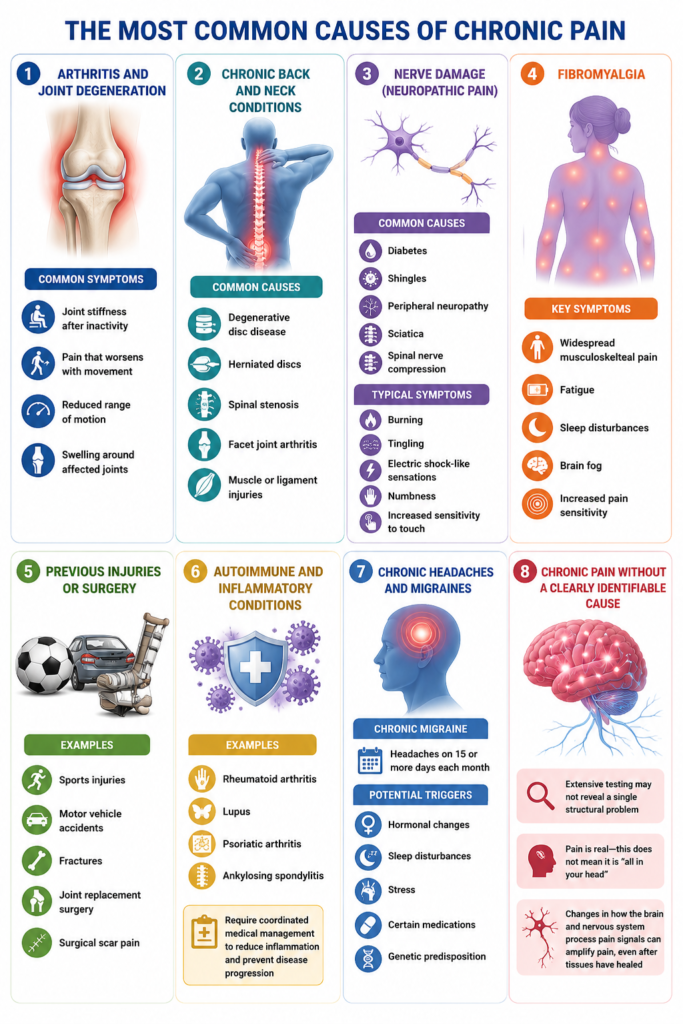
1. Arthritis and Joint Degeneration
Osteoarthritis is among the leading causes of chronic pain, particularly in older adults. As cartilage gradually wears away, joints become inflamed, stiff, and painful.
Common symptoms include:
- Joint stiffness after inactivity
- Pain that worsens with movement
- Reduced range of motion
- Swelling around affected joints
Other inflammatory joint conditions, such as rheumatoid arthritis, can also lead to long-term pain and require specialized medical management.
2. Chronic Back and Neck Conditions
Back pain is one of the most frequent causes of disability worldwide. Chronic pain may result from:
- Degenerative disc disease
- Herniated discs
- Spinal stenosis
- Facet joint arthritis
- Muscle or ligament injuries
Because several conditions can produce similar symptoms, imaging alone does not always explain the severity of pain. A comprehensive physical examination often provides valuable clinical information.
3. Nerve Damage (Neuropathic Pain)
Neuropathic pain develops when nerves become injured or dysfunctional.
Common causes include:
- Diabetes
- Shingles
- Peripheral neuropathy
- Sciatica
- Spinal nerve compression
People often describe nerve pain as:
- Burning
- Tingling
- Electric shock-like sensations
- Numbness
- Increased sensitivity to touch
Neuropathic pain typically requires a different treatment approach than pain caused by inflammation or injury.
4. Fibromyalgia
Fibromyalgia is a chronic pain disorder characterized by widespread musculoskeletal pain along with symptoms such as:
- Fatigue
- Sleep disturbances
- Brain fog
- Increased pain sensitivity
Although researchers continue to study its exact cause, current evidence suggests altered pain processing within the central nervous system plays an important role.
5. Previous Injuries or Surgery
Pain sometimes persists long after tissues have healed.
Examples include:
- Sports injuries
- Motor vehicle accidents
- Fractures
- Joint replacement surgery
- Surgical scar pain
Not everyone develops chronic pain after an injury. Factors such as nerve involvement, inflammation, rehabilitation, and individual pain processing can all influence recovery.
6. Autoimmune and Inflammatory Conditions
Several autoimmune diseases cause chronic inflammation that contributes to ongoing pain.
Examples include:
- Rheumatoid arthritis
- Lupus
- Psoriatic arthritis
- Ankylosing spondylitis
These conditions often require coordinated medical management to reduce inflammation and prevent disease progression.
7. Chronic Headaches and Migraines
Migraine is more than “just a headache.” It is a neurological disorder that can significantly affect quality of life.
Individuals with chronic migraine may experience headaches on 15 or more days each month.
Potential contributing factors include:
- Hormonal changes
- Sleep disturbances
- Stress
- Certain medications
- Genetic predisposition
8. Chronic Pain Without a Clearly Identifiable Cause
In some cases, extensive testing does not reveal a single structural problem.
This does not mean the pain is “all in your head.”
Researchers now recognize that persistent pain can involve changes in how the brain and nervous system process pain signals, sometimes referred to as central sensitization or nociplastic pain. These changes can amplify pain even after tissues have healed.
Why Identifying the Underlying Cause Matters
Many people attempt to manage chronic pain by treating symptoms alone. However, pain management often improves when clinicians identify contributing factors such as:
- Joint dysfunction
- Nerve irritation
- Inflammatory disease
- Muscle imbalances
- Metabolic conditions
- Lifestyle factors including sleep and physical activity
A comprehensive evaluation helps determine which factors are contributing to an individual’s symptoms and guides a personalized treatment plan.
How Chronic Pain Is Evaluated
A thorough evaluation typically includes:
Medical History
Your healthcare provider will ask about:
- When the pain began
- Location and severity
- Activities that worsen or improve symptoms
- Previous injuries
- Medical conditions
- Current medications
Physical Examination
The examination may assess:
- Joint mobility
- Muscle strength
- Balance
- Posture
- Neurological function
- Areas of tenderness
Diagnostic Testing
Depending on your symptoms, additional testing may include:
- X-rays
- MRI or CT imaging
- Blood tests
- Nerve conduction studies
- Ultrasound
Not every patient requires extensive testing. Diagnostic decisions are based on clinical findings and individual risk factors.
When Should You See a Healthcare Provider?
You should seek medical evaluation if pain:
- Persists longer than three months
- Interferes with work or daily activities
- Disrupts sleep
- Continues to worsen
- Causes numbness, weakness, or loss of function
- Develops after significant injury
- Is accompanied by fever, unexplained weight loss, or bowel or bladder changes
Early evaluation may improve the chances of identifying treatable causes before symptoms become more difficult to manage.
Get a Comprehensive Evaluation for Chronic Pain
If you’re experiencing persistent pain that affects your daily life, a comprehensive medical evaluation can help identify potential contributing factors and determine the most appropriate treatment plan. The team at Revolve Integrative Health provides personalized, evidence-informed care designed to evaluate the underlying causes of chronic pain and develop treatment strategies based on your individual needs.
Key Takeaways
- Chronic pain lasts at least three months and can have many underlying causes.
- The most common causes of chronic pain include arthritis, spinal disorders, nerve damage, fibromyalgia, previous injuries, autoimmune diseases, and chronic migraines.
- Persistent pain is often multifactorial and may involve both physical and nervous system changes.
- A comprehensive evaluation helps identify contributing factors and guides personalized treatment.
- Evidence-based management often combines physical rehabilitation, lifestyle interventions, medications when appropriate, and other multidisciplinary therapies.