
Frequency Specific
Microcurrent (FSM)
A remarkable therapeutic tool that uses extremely low amperage current combined with specific frequencies to support the body's natural healing processes at a cellular level.
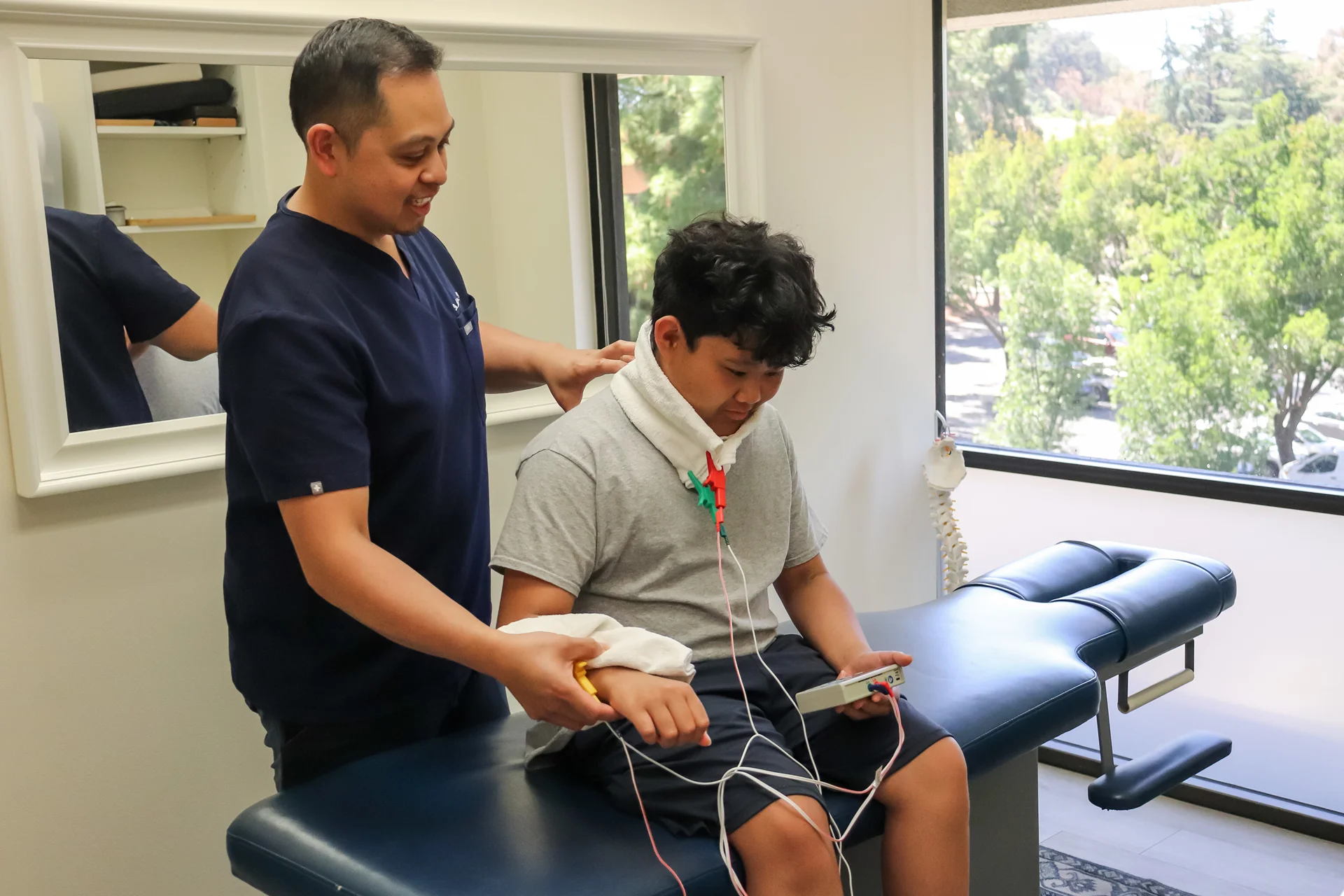
What is Frequency Specific Microcurrent?
Frequency Specific Microcurrent (FSM) uses extremely low amperage current — measured in microamps, about 1/1000th of what you'd find in TENS units — combined with specific frequencies that appear to resonate with particular tissues and conditions in the body. The current is below the level of sensation, making treatments painless and non-invasive.
What makes FSM truly unique is its specificity. Using two channels simultaneously — one targeting the condition (such as inflammation or scar tissue) and one targeting the specific tissue type (such as nerve, muscle, disc, or fascia) — FSM creates a therapeutic effect that is both gentle and powerful. Certain frequencies can target inflammation in nerves, while others address scarring in fascia. This precision allows FSM to address conditions that were previously difficult to treat.
A fundamental principle of FSM is that it always works when the treatment matches the actual cause of the problem. This is why proper assessment is central to how Dr. Marco applies FSM — looking beyond diagnostic labels to understand what is actually happening in the tissue. At Revolve Integrative Health, FSM is frequently combined with myofascial therapy and chiropractic care as part of a comprehensive, root-cause recovery plan.
Documented Research Findings
500%
Increase in cellular ATP (energy) production
70%
Enhancement in protein synthesis
40%
Improvement in amino acid transport
How It Works
The Science of Microcurrent & Frequency
ATP Production. Research has shown that microcurrent in the range of 10–500 microamps can increase ATP (cellular energy) production by up to 500%, enhance protein synthesis by 70%, and improve amino acid transport by 40%. These effects provide cells with the energy and resources needed for optimal function and healing — essentially recharging the cellular battery.
The Dual-Channel Approach. FSM uses two channels simultaneously. Channel A delivers frequencies associated with various tissue conditions — such as inflammation, scar tissue, or fibrosis. Channel B delivers frequencies associated with specific tissue types — such as nerve, muscle, disc, or fascia. Practitioners select frequency combinations based on their assessment and clinical experience. The frequencies are delivered through a ramped square wave that carries the current to the tissues.
The Principle of Resonance. Every tissue in the body has natural bioelectrical properties. FSM practitioners work with the understanding that tissues may respond to specific frequency combinations through a principle similar to resonance — where matching frequencies can influence tissue behavior. Think of it like two tuning forks: when one vibrates at a specific frequency, another tuned to the same frequency will begin to vibrate in response.
Frequency as Diagnosis. The specificity of FSM frequencies provides an additional diagnostic tool. If frequencies for nerve inflammation resolve the pain but frequencies for muscle inflammation do not, this tells the practitioner that the nerve — not the muscle — is the primary problem. As FSM practitioners describe it: the frequencies either work or they don't, and when they work, they confirm what tissue and condition are actually involved.
Inflammation Reduction. Published blinded animal research at the University of Sydney documented a 62% reduction in COX-mediated inflammation markers with a 4-minute time-dependent response, with 100% of subjects responding. Human research has documented measurable reductions in inflammatory cytokines including IL-1, IL-6, TNF-α, and Substance P during FSM treatment sessions for fibromyalgia associated with cervical spine trauma — published in the Journal of Bodywork and Movement Therapies.
The Treatment Approach
Identify the Tissue
85% of the diagnosis comes from the patient's history. Dr. Marco pays careful attention to the mechanism of onset, symptom patterns, and physical examination findings to identify which tissue is causing the pain or dysfunction.
Determine What's Wrong
FSM looks beyond the diagnostic label to understand what is actually happening in the tissue — whether that is inflammation, scar tissue, nerve compression, disc involvement, or another condition.
Address the Root Cause
Two patients with the same diagnosis may receive completely different FSM protocols based on their individual history and examination. Protocols are selected to match the actual cause, not the label.
Support Lasting Change
FSM addresses compensatory patterns, the nervous system's role in maintaining pain, and the conditions needed for lasting recovery — including proper hydration, which significantly enhances treatment effectiveness.
Conditions Commonly Addressed
Fibromyalgia
Nerve Pain & Neuropathy
Disc Pain
Myofascial Pain & Trigger Points
Concussion & TBI
Delayed Onset Muscle Soreness
Scar Tissue & Adhesions
Sciatica
Headaches & Migraines
Acute Sports Injuries
Post-Surgical Recovery
Chronic Inflammation
Important Notice. Frequency Specific Microcurrent (FSM) is not intended to diagnose, treat, cure, or prevent any disease. FSM is a 510(k)-cleared microcurrent modality used by licensed healthcare practitioners. FSM does not claim to diagnose, cure, treat, or prevent any disease or medical condition. The use of specific frequencies as a therapeutic tool has not been evaluated by the FDA. FSM is contraindicated during pregnancy and in patients with demand pacemakers. Individual results may vary.
Medical Disclaimer. The information on this page is for educational purposes only and is not a substitute for medical advice, diagnosis, or treatment. Dr. Marco Abellera, DC follows all applicable FDA guidelines. Benefits and risks of all treatments will be discussed in full during your consultation.
Could FSM be right for you?
Book a consultation and let Dr. Marco assess your condition and determine whether Frequency Specific Microcurrent belongs in your care plan.
Book a Consultation