

You sit down to answer an email you have written dozens of times before, but suddenly you cannot find the right words. Later, you walk into another room and forget what you went there to do. During a conversation, you may lose your train of thought halfway through a sentence. When experiences like these happen repeatedly, they are often described as brain fog.
So, what causes brain fog? Brain fog is not a specific medical diagnosis. Instead, it describes a group of cognitive symptoms that may include difficulty concentrating, forgetfulness, slower thinking, and mental fatigue. These symptoms can occur for many reasons, including inadequate sleep, prolonged stress, hormonal changes, nutritional deficiencies, certain medications, and underlying health conditions. Understanding when brain fog occurs and what other symptoms accompany it can help determine whether simple changes may be helpful or whether a medical evaluation is appropriate.
What Is Brain Fog?
Brain fog is an informal term used to describe difficulties with cognitive functions such as attention, memory, concentration, and information processing. It is not a disease or diagnosis on its own, and the experience can differ considerably from one person to another.
Common symptoms associated with brain fog may include:
- Difficulty concentrating
- Forgetfulness or short-term memory problems
- Losing your train of thought
- Difficulty finding the right words
- Slower thinking or information processing
- Trouble paying attention
- Mental fatigue
- Difficulty multitasking
- Feeling mentally unclear
Brain fog itself does not explain why these symptoms are occurring. It is better understood as a description of cognitive difficulties that may have several possible contributing factors. If these symptoms become persistent or begin interfering with everyday activities, learning more about brain fog and the factors that may contribute to it can be a useful starting point.
What Causes Brain Fog?
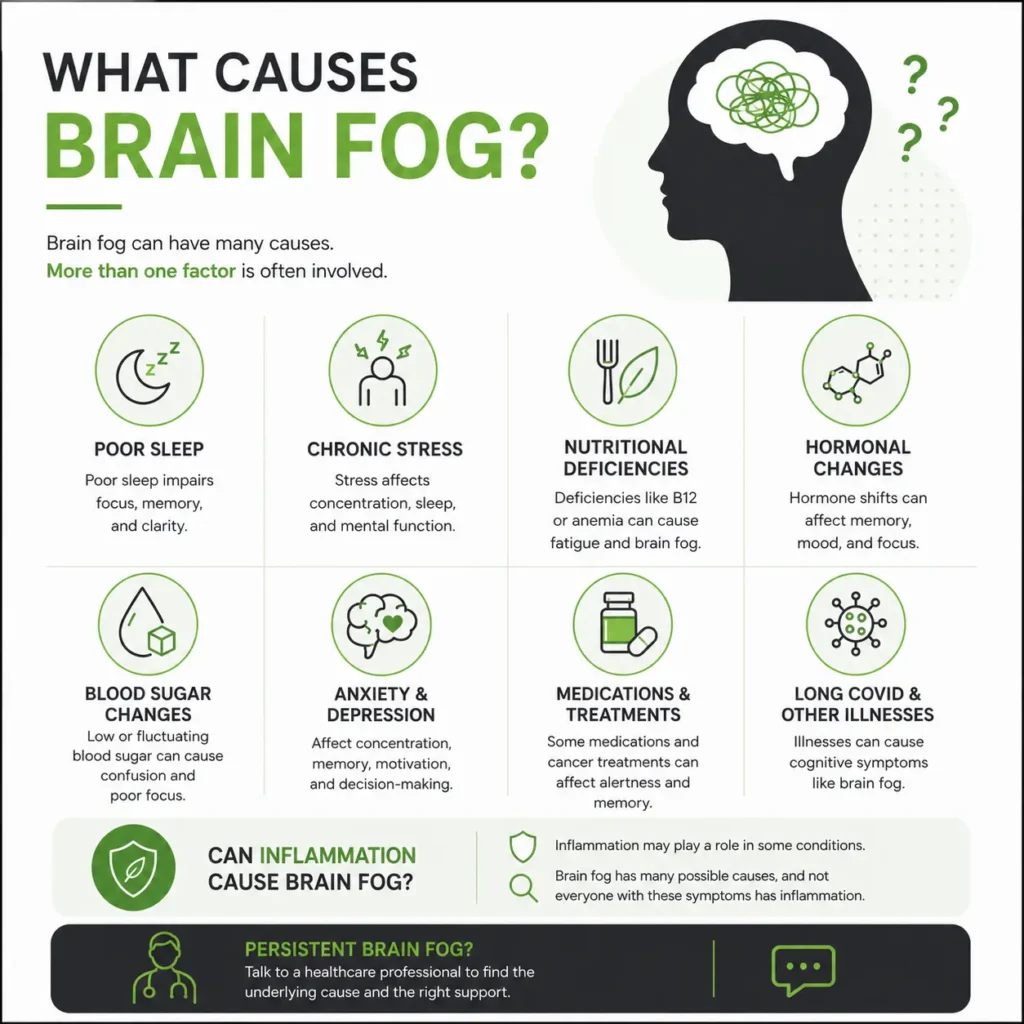
There is no single cause of brain fog. Problems with concentration, memory, or mental clarity may develop when factors affecting sleep, physical health, mental health, hormones, nutrition, medications, or illness interfere with normal cognitive function.
The exact cause is not always obvious, and more than one factor may be involved at the same time. For example, prolonged stress may interfere with sleep, while poor sleep can make concentration and memory more difficult the following day. Looking at the broader pattern of symptoms can therefore be more useful than focusing on one possible trigger in isolation.
Poor Sleep
Sleep plays an important role in attention, learning, memory, and other cognitive functions. When you consistently do not get enough quality sleep, it may become harder to concentrate, process information, and remember details.
Sleep disruption does not necessarily mean simply staying up too late. Insomnia, irregular sleep schedules, frequent nighttime awakenings, and sleep disorders may all interfere with restorative sleep. If your brain fog is consistently worse following poor sleep or you frequently wake feeling unrefreshed, sleep quality may be an important factor to discuss with a healthcare professional.
Chronic Stress
Periods of significant or prolonged stress can make concentration and memory more difficult. Stress may also affect sleep, eating patterns, physical activity, and mental health, which can further influence how mentally alert you feel throughout the day.
Someone experiencing ongoing stress may feel mentally exhausted, become more easily distracted, or have difficulty concentrating on complicated tasks. However, persistent brain fog should not automatically be attributed to stress. When cognitive symptoms continue despite adequate rest and appropriate stress management, other potential contributing factors may need to be evaluated.
Nutritional Deficiencies
Certain nutritional deficiencies can cause neurological or cognitive symptoms. Vitamin B12 deficiency is one example. The National Institutes of Health Office of Dietary Supplements notes that vitamin B12 deficiency may cause tiredness, weakness, confusion, poor memory, balance problems, and numbness or tingling in the hands and feet.
Other nutritional problems, including some forms of anemia, may also contribute to fatigue and cognitive difficulties. However, this does not mean that taking supplements will necessarily resolve brain fog. Supplementation is most appropriate when a deficiency or another specific clinical need has been identified, and a healthcare professional can determine whether testing is appropriate.
Hormonal Changes
Hormonal changes may contribute to changes in memory, concentration, sleep, and mental clarity in some people. These symptoms can be particularly noticeable during perimenopause and menopause, when forgetfulness and difficulty concentrating may occur alongside sleep disturbances and mood changes.
Thyroid disorders can also affect cognitive function, energy levels, and mood. Because many conditions can produce overlapping symptoms, new or significant cognitive changes should not automatically be attributed to hormones or normal aging. Persistent or worsening symptoms may warrant further evaluation.
Blood Sugar Changes
The brain requires a continuous supply of energy, and significant changes in blood glucose can affect cognitive function. Low blood sugar, or hypoglycemia, may cause weakness, dizziness, confusion, difficulty concentrating, and other changes in mental function.
This can be particularly important for people with diabetes who use insulin or certain glucose-lowering medications. Recurring episodes of confusion or cognitive difficulty that appear to coincide with blood sugar changes should be discussed with a healthcare professional so that the underlying pattern can be properly assessed.
Anxiety and Depression
Mental health can have a significant effect on cognitive function. Anxiety may make concentration more difficult when persistent worry competes for attention, while depression may be associated with fatigue, slower thinking, difficulty concentrating, memory complaints, and problems making decisions.
These are genuine cognitive symptoms, and they may overlap with symptoms caused by sleep problems, medications, hormonal changes, or physical health conditions. A healthcare professional can consider these possibilities together rather than assuming that cognitive difficulties have either a strictly physical or strictly psychological cause.
Medications and Medical Treatments
Certain medications may affect alertness, concentration, or memory. Depending on the individual, cognitive side effects may occur with some medications that cause sedation or otherwise affect the central nervous system.
Cognitive changes are also recognized in some people receiving cancer treatment. The term “chemo brain” is sometimes used to describe problems with memory, concentration, or mental processing that occur during or after cancer treatment. If brain fog begins after starting a medication or changing a dose, discuss the symptoms with the prescribing healthcare professional rather than stopping a prescribed medication without medical guidance.
Long COVID and Other Illnesses
Brain fog has become particularly well known as a potential symptom of Long COVID. The Centers for Disease Control and Prevention lists difficulty thinking or concentrating, sometimes called brain fog, among commonly reported neurological symptoms of Long COVID. Other symptoms may include fatigue, headaches, sleep problems, dizziness, and symptoms that worsen after physical or mental effort.
Researchers continue to investigate why cognitive symptoms persist in some people following COVID-19. Long COVID is complex, and there may not be one mechanism responsible for every patient’s symptoms. Brain fog may also occur alongside other chronic health conditions, which is another reason persistent cognitive symptoms may require a broader evaluation rather than assuming there is a single cause.
Can Inflammation Cause Brain Fog?
Inflammation is being investigated as one potential contributor to cognitive symptoms in certain diseases, particularly illnesses involving infection or immune system activity. Researchers have proposed mechanisms involving immune signaling and neuroinflammation, but the relationship remains complex and continues to be studied.
The presence of brain fog does not automatically mean that someone has inflammation in the brain. Different conditions may produce similar cognitive symptoms through different biological mechanisms, and additional research is needed to understand exactly how inflammation contributes to brain fog in different patient populations. This distinction matters because fatigue, forgetfulness, slower thinking, and difficulty concentrating can occur for many unrelated reasons.
How Do You Know What Is Causing Your Brain Fog?
There is no single test that diagnoses brain fog because brain fog describes a group of symptoms rather than a specific disease. Medical evaluation instead focuses on identifying possible contributing factors and determining whether another condition may explain the cognitive changes.
A healthcare professional may ask about:
- When your symptoms started
- Whether symptoms began suddenly or gradually
- How frequently they occur
- Your sleep quality and sleep schedule
- Recent or prolonged stress
- Mental health symptoms
- Recent illnesses or infections
- Current medications and supplements
- Dietary patterns
- Alcohol or substance use
- Hormonal changes
- Other physical or neurological symptoms
- Whether symptoms interfere with work or everyday activities
Depending on your medical history and symptoms, further evaluation may include a physical examination, neurological assessment, medication review, or laboratory testing. Testing should be individualized because there is no universal “brain fog panel” that identifies the cause in every patient. The goal is to evaluate plausible contributing factors based on symptoms, medical history, examination findings, and other relevant clinical information.
When Should You See a Doctor for Brain Fog?
Occasionally forgetting where you placed your keys or struggling to concentrate after a sleepless night does not necessarily indicate a medical problem. Brain fog deserves more attention, however, when it becomes persistent, progressively worse, noticeably different from your normal cognitive function, or disruptive to everyday life.
Consider scheduling a medical evaluation if brain fog:
- Persists for several weeks
- Becomes progressively worse
- Interferes with work, school, driving, or everyday responsibilities
- Makes familiar tasks unusually difficult
- Begins after an illness or new medication
- Occurs alongside significant fatigue or other unexplained symptoms
- Is accompanied by numbness, tingling, balance problems, or other neurological changes
- Is noticeably different from your normal cognitive function
Seeking an evaluation does not necessarily mean that a serious medical condition is present. Instead, it provides an opportunity to determine whether sleep, medications, nutrition, metabolic health, mental health, hormonal changes, or another medical factor may be contributing to the symptoms.
When Is Sudden Confusion an Emergency?
Brain fog generally refers to ongoing or intermittent problems with concentration, memory, and mental clarity. Sudden confusion or an abrupt neurological change is different and may require emergency medical attention, particularly when it occurs with other neurological symptoms.
Warning signs of a stroke can include sudden:
- Confusion or difficulty understanding speech
- Trouble speaking
- Numbness or weakness, particularly on one side of the body
- Vision problems
- Difficulty walking, dizziness, or loss of coordination
- Severe headache without a known cause
If these symptoms occur suddenly, call 911 immediately rather than waiting to see whether they improve. Severe confusion, loss of consciousness, difficulty breathing, or other rapidly developing neurological symptoms also warrant immediate medical attention.
What Can You Do About Brain Fog?
Because what causes brain fog varies from person to person, there is no single treatment that is appropriate for everyone. The most appropriate approach depends on what is contributing to the symptoms, which is why identifying patterns and addressing relevant health factors can be important.
For mild or occasional symptoms, starting with basic factors that support cognitive and overall health may be reasonable. Persistent or worsening symptoms, however, should not be managed indefinitely through lifestyle changes alone without considering whether medical evaluation is appropriate.
Prioritize Consistent Sleep
Maintaining a regular sleep schedule and allowing enough time for adequate sleep can support attention, memory, and daytime alertness. Improving sleep habits may be particularly useful when brain fog consistently follows nights of insufficient or disrupted sleep.
However, spending enough time in bed does not always mean that sleep is restorative. If you routinely wake feeling unrefreshed, experience significant daytime sleepiness, or have persistent sleep difficulties, consider discussing these symptoms with a healthcare professional. An underlying sleep disorder may need to be evaluated.
Eat Regular, Nutritionally Balanced Meals
Regular meals that provide adequate nutrients support general health and normal body function. A varied diet can also help provide nutrients involved in neurological and metabolic processes.
Avoid assuming that a particular vitamin or supplement will resolve brain fog. When a nutritional deficiency is suspected, appropriate testing can help determine whether supplementation or another intervention is needed. This approach also reduces the risk of overlooking another potential cause of cognitive symptoms.
Stay Physically Active When Appropriate
Regular physical activity can support cardiovascular, metabolic, and mental health, all of which contribute to overall well-being. The appropriate amount and intensity of activity will vary according to a person’s health, fitness level, and underlying medical conditions.
This distinction is particularly important for people whose symptoms become significantly worse following exertion. Post-exertional malaise can occur with Long COVID and certain other conditions, so people experiencing this pattern should discuss activity recommendations with a healthcare professional rather than attempting to exercise through worsening symptoms.
Manage Cognitive Overload
When concentration is difficult, practical strategies can reduce the amount of information your brain has to manage at one time. Small adjustments may make everyday responsibilities easier while you work to understand what is contributing to the symptoms.
Helpful strategies may include:
- Breaking complicated tasks into smaller steps
- Focusing on one task at a time
- Using calendars or written reminders
- Keeping frequently used items in consistent locations
- Taking appropriate breaks during mentally demanding activities
- Scheduling difficult tasks for times when you tend to feel most alert
These approaches can help compensate for temporary difficulties with concentration or memory, but they do not treat every potential cause of brain fog. Persistent symptoms should still be evaluated when they are affecting daily function or are accompanied by other concerning changes.
Review Persistent Symptoms With a Healthcare Professional
If brain fog continues despite addressing factors such as sleep, nutrition, and stress, a broader medical evaluation may be appropriate. Clinicians may consider sleep quality, medications, nutritional status, metabolic health, hormonal changes, mental health, previous illnesses, and other medical conditions depending on the pattern of symptoms.
The appropriate evaluation varies between patients rather than following a single standard protocol. Different diagnostic and clinical services may be considered according to an individual’s medical history, symptoms, examination findings, and clinical needs.
Can Brain Fog Go Away?
Brain fog may improve, particularly when it is associated with a temporary factor such as inadequate sleep, acute stress, medication effects, or recovery from an illness. When the contributing factor improves, concentration, memory, and mental clarity may improve as well.
For other people, cognitive symptoms may persist because an underlying contributing factor remains present. How long brain fog lasts therefore depends largely on its cause, and some people experience intermittent symptoms while others have cognitive difficulties for longer periods. Rather than focusing exclusively on eliminating the sensation of brain fog, it can be more useful to determine what may be interfering with cognitive function and whether that factor can be addressed.
Getting Answers When Brain Fog Persists
If you are experiencing persistent brain fog, difficulty concentrating, memory changes, or mental fatigue, consider discussing your symptoms with a qualified healthcare professional. Because what causes brain fog can differ considerably from one patient to another, an individualized evaluation can help identify potential contributing factors and determine whether additional testing or care may be appropriate.
At Revolve Integrative Health, patients with persistent cognitive symptoms can receive a personalized medical evaluation that considers their health history, symptoms, and potential contributing factors. You can learn more about the practice’s approach to brain fog or review the available services to better understand options for evaluation and care.
Bulleted Key Takeaways
- Brain fog is a description of cognitive symptoms rather than a specific medical diagnosis.
- Symptoms may include difficulty concentrating, forgetfulness, slower thinking, word-finding problems, and mental fatigue.
- Potential contributors include inadequate sleep, prolonged stress, nutritional deficiencies, hormonal changes, blood sugar changes, anxiety, depression, medications, and certain illnesses.
- Difficulty thinking and concentrating is also a commonly reported symptom of Long COVID.
- There is no single test or treatment for brain fog because appropriate evaluation and treatment depend on the underlying cause.
- Persistent, worsening, or disruptive brain fog should be discussed with a healthcare professional.
- Sudden confusion, speech difficulty, one-sided weakness, vision changes, or other abrupt neurological symptoms require immediate medical attention.