

Many people experiencing back pain, neck pain, joint discomfort, or limited mobility wonder whether they should see a physical therapist or a chiropractor. While both healthcare professionals focus on improving movement and reducing pain, they use different treatment approaches and may be appropriate for different conditions.
Understanding the differences between physical therapy and chiropractic care can help you make an informed decision about which option best fits your needs. In some cases, these treatments may even complement one another as part of a comprehensive care plan.
What Is Physical Therapy?
Physical therapy focuses on restoring movement, strength, flexibility, and physical function after an injury, surgery, or medical condition. Physical therapists evaluate how your muscles, joints, nerves, and movement patterns work together before developing a personalized rehabilitation program.
Treatment may include:
- Therapeutic exercises
- Stretching programs
- Strength training
- Balance and gait training
- Manual therapy
- Posture correction
- Education on injury prevention
Physical therapy is commonly recommended for people recovering from orthopedic surgery, sports injuries, neurological conditions, or mobility limitations.
What Is Chiropractic Care?
Chiropractic care is a healthcare profession that focuses on diagnosing and treating conditions affecting the musculoskeletal system, particularly the spine and joints. Chiropractors use hands-on techniques, including spinal manipulation and joint mobilization, to improve joint function, reduce pain, and enhance mobility.
Depending on the patient’s condition, chiropractic care may also include:
- Soft tissue therapy
- Corrective exercises
- Lifestyle recommendations
- Ergonomic guidance
- Mobility training
Evidence supports chiropractic care as one treatment option for certain types of acute and chronic low back pain, neck pain, and some headache disorders when provided by a licensed chiropractor.
Physical Therapy vs. Chiropractic Care: Key Differences
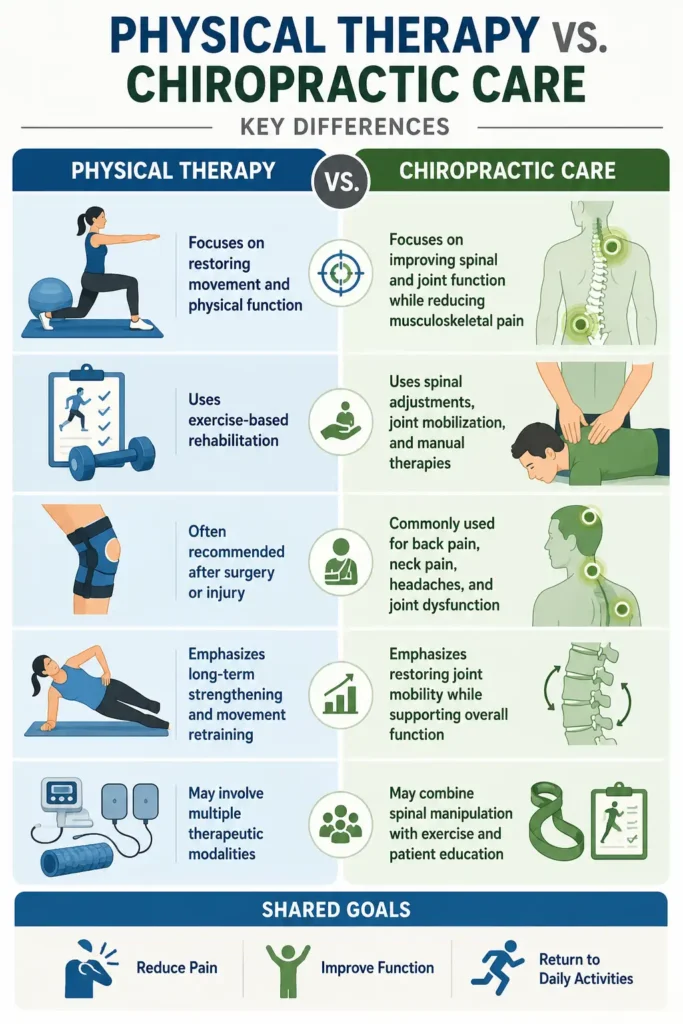
Physical therapy and chiropractic care both aim to reduce pain and improve movement, but they use different treatment approaches. The right choice depends on your condition, symptoms, and recovery goals.
Physical therapy focuses on restoring strength, mobility, and physical function through exercise-based rehabilitation. Treatment often includes therapeutic exercises, stretching, strength training, and movement retraining, making it a common option for recovery after surgery, sports injuries, or conditions that affect mobility.
Chiropractic care focuses on improving spinal and joint function through hands-on techniques such as spinal adjustments and joint mobilization. It is commonly used to address back pain, neck pain, headaches, joint stiffness, and other musculoskeletal conditions. Treatment may also include soft tissue therapy, corrective exercises, and posture education.
While their methods differ, both approaches are evidence-informed and can help improve function and reduce pain. In some cases, combining physical therapy and chiropractic care may provide a more comprehensive treatment plan tailored to an individual’s needs.
When Physical Therapy May Be the Better Choice
Physical therapy is often recommended when rehabilitation is the primary goal.
Examples include:
- Recovery after joint replacement surgery
- ACL reconstruction rehabilitation
- Stroke recovery
- Balance disorders
- Muscle weakness
- Sports injury rehabilitation
- Chronic mobility limitations
A physical therapist typically develops a structured exercise program designed to gradually improve strength, flexibility, and movement.
When Chiropractic Care May Be the Better Choice
Chiropractic care may be appropriate for individuals experiencing musculoskeletal pain related to joint dysfunction, particularly involving the spine.
Common reasons people seek chiropractic care include:
- Low back pain
- Neck pain
- Sciatica
- Certain types of headaches
- Joint stiffness
- Reduced spinal mobility
- Pain related to poor posture
Treatment plans often combine manual therapy with exercise recommendations and education to help improve long-term outcomes.
Can You Benefit From Both?
Yes. Physical therapy and chiropractic care are not mutually exclusive.
For some patients, combining both approaches may provide a more comprehensive treatment plan. Chiropractic adjustments may help restore joint mobility and reduce pain, while physical therapy can build strength, improve stability, and retrain movement patterns.
Research suggests that both physical therapy and chiropractic care can produce similar outcomes for many common spinal conditions. The best choice often depends on your diagnosis, symptoms, goals, and medical history.
Factors to Consider When Choosing Between Physical Therapy and Chiropractic Care
Choosing the right treatment depends on several factors, including:
Your Diagnosis
Some conditions respond better to rehabilitation exercises, while others may benefit from manual therapies that improve joint mobility.
Your Symptoms
Pain location, symptom duration, and how your condition affects daily activities all influence treatment recommendations.
Your Goals
Are you trying to recover after surgery? Return to sports? Reduce recurring back pain? Improve mobility? Your goals help determine the most appropriate treatment plan.
Your Overall Health
Your healthcare provider should consider your medical history, current medications, previous injuries, and any underlying health conditions before recommending treatment.
How an Integrative Approach Can Help
Physical therapy and chiropractic care are not competing treatments. Depending on your diagnosis, symptoms, and recovery goals, they may be used independently or as part of a comprehensive care plan to improve mobility, reduce pain, and restore function. A thorough evaluation is the best way to determine which approach, or combination of approaches, is most appropriate for your needs.
If you’re looking for a personalized evaluation to determine whether chiropractic care is an appropriate option for your condition, Revolve Integrative Health can help. Care begins with a comprehensive assessment to identify the factors contributing to your symptoms and develop an evidence-informed treatment plan tailored to your individual needs and health goals.
Key Takeaways
- Physical therapy and chiropractic care both aim to reduce pain and improve movement.
- Physical therapy emphasizes rehabilitation, strengthening, and restoring function.
- Chiropractic care focuses on improving joint and spinal mobility through hands-on treatment.
- Some patients benefit from combining both approaches.
- The right treatment depends on your diagnosis, symptoms, medical history, and recovery goals.