

Chronic pain can affect far more than the area that hurts. When pain persists for months, it may interfere with movement, sleep, concentration, work, exercise, and everyday activities. It can also become more complicated over time as changes in the nervous system, physical function, and other health conditions influence how pain is experienced.
For this reason, chronic pain treatment options are not always limited to finding one therapy that makes the pain disappear. Effective management often begins with identifying what may be contributing to the symptoms and determining which combination of treatments is appropriate for the individual.
What Is Chronic Pain?
Chronic pain is generally defined as pain that persists or recurs for longer than three months. Unlike acute pain, which typically develops in response to an injury or illness and improves as the underlying problem resolves, chronic pain may continue well beyond the expected healing period.
Pain may remain localized to one area, such as the back, shoulder, or knee, or affect multiple areas of the body. Some people experience persistent aching or stiffness, while others describe burning, tingling, shooting, or electric sensations.
Chronic pain may be associated with:
- Previous injuries
- Osteoarthritis and other joint conditions
- Persistent tendon problems
- Low back or neck conditions
- Nerve injuries or neuropathic pain
- Autoimmune or inflammatory disorders
- Fibromyalgia
- Certain metabolic conditions
- Long-term medical conditions
The CDC notes that chronic pain can result from chronic conditions such as arthritis and diabetes, autoimmune disorders, and previous injuries. It can also significantly affect quality of life.
For people experiencing pain alongside fatigue, cognitive symptoms, digestive concerns, sleep disturbances, or other persistent health problems, a broader evaluation for factors associated with complex chronic illness may also be appropriate.
Why Can Chronic Pain Continue After an Injury Has Healed?
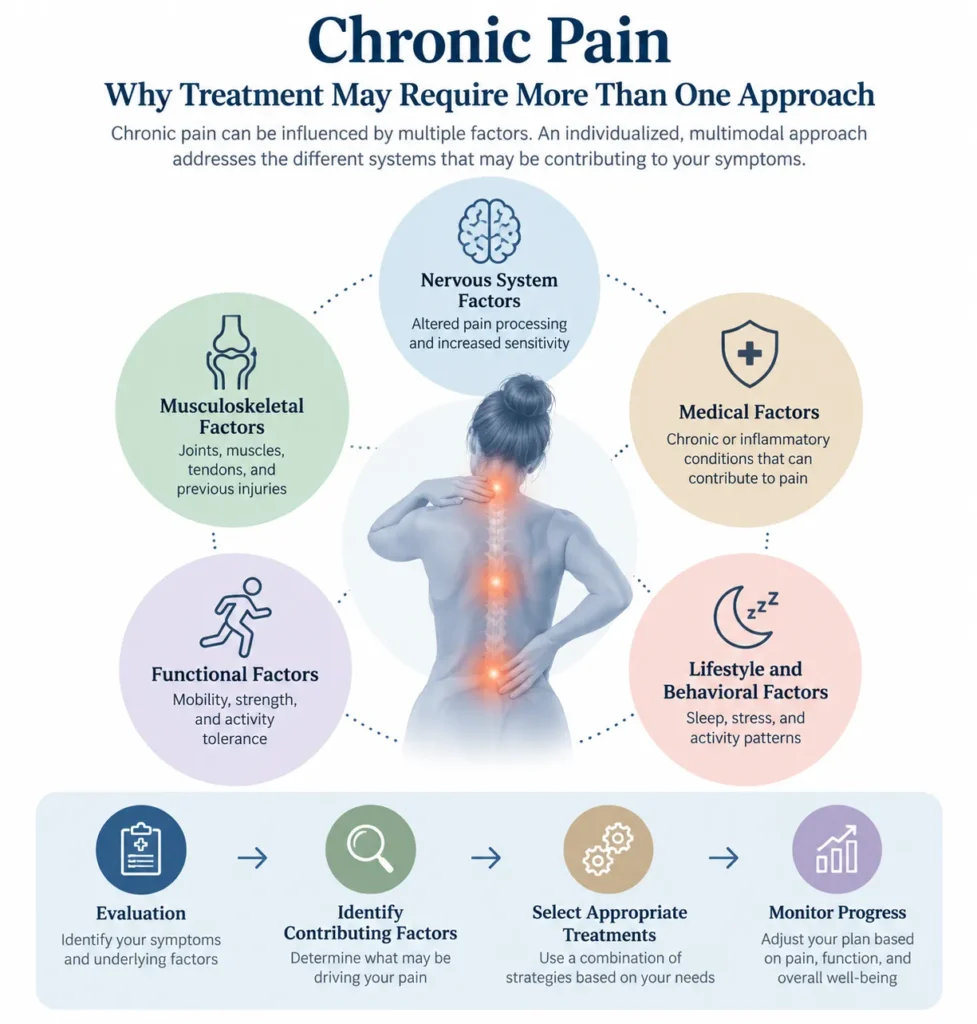
Persistent pain does not necessarily mean that tissue is continuing to sustain damage. Pain is produced through communication between tissues, peripheral nerves, the spinal cord, and the brain. When pain continues for an extended period, changes can occur in how the nervous system processes these signals.
Changes in Pain Processing
In some chronic pain conditions, the nervous system can become increasingly responsive to sensory input. This phenomenon is often discussed in relation to peripheral and central sensitization.
Central sensitization describes increased responsiveness within the central nervous system. As pain pathways become more sensitive, stimuli that would normally produce little discomfort may become painful, and existing pain signals may feel more intense.
This does not mean that chronic pain is imaginary or simply psychological. Pain is a genuine biological experience. It does mean that persistent pain can become more complicated than the original injury that triggered it.
Ongoing Musculoskeletal Problems
Other patients continue to have a physical source contributing to their symptoms.
Tendon disorders, joint degeneration, muscle dysfunction, altered biomechanics, previous injuries, and other musculoskeletal problems can contribute to persistent pain and limitations in movement.
Identifying the dominant source or sources of pain can therefore be an important part of choosing treatment.
Why Chronic Pain Treatment Often Requires More Than One Approach
There is no single chronic pain treatment that works for every patient.
Pain can involve biological, neurological, musculoskeletal, psychological, and social factors. The relative importance of each factor also varies considerably from one person to another.
For that reason, chronic pain is increasingly managed using a multimodal approach. Rather than relying exclusively on one intervention, multimodal care may combine several strategies selected according to the patient’s diagnosis, symptoms, functional limitations, medical history, and treatment goals.
The objective may not always be complete elimination of pain. Clinically meaningful goals can also include:
- Reducing pain intensity
- Improving mobility
- Increasing tolerance for physical activity
- Improving sleep
- Returning to work or recreational activities
- Improving strength and physical function
- Reducing interference with everyday activities
- Improving overall quality of life
A treatment plan should be individualized because two patients experiencing pain in the same location may have very different underlying problems.
Chronic Pain Treatment Options
Treatment should begin with an appropriate evaluation. Depending on the suspected cause, this may involve a medical history, physical examination, neurological or musculoskeletal assessment, diagnostic imaging, laboratory testing, or referral to another healthcare professional.
Once potential contributing factors have been identified, several treatment approaches may be considered.
Exercise and Rehabilitation
Appropriate movement is an important component of treatment for many musculoskeletal pain conditions.
Depending on the diagnosis, rehabilitation may focus on improving strength, mobility, coordination, endurance, or tolerance for specific activities. Gradual exposure to movement can also help people regain confidence in activities they have avoided because of pain.
Exercise needs to be individualized. A person with an acute tendon injury, for example, may require a different program from someone experiencing chronic widespread pain.
Medications
Medications can play an important role in chronic pain management when clinically appropriate.
Options depend on the type of pain and may include acetaminophen, nonsteroidal anti-inflammatory drugs (NSAIDs), certain antidepressants, anticonvulsant medications used for neuropathic pain, topical medications, and other prescription treatments.
Every medication has potential benefits, risks, interactions, and contraindications. Long-term medication decisions should therefore be made with an appropriate healthcare professional rather than through self-treatment.
Frequency-Specific Microcurrent
Microcurrent therapies use very low levels of electrical current. Frequency-specific microcurrent, or FSM, uses combinations of frequencies as part of treatment protocols for pain and other symptoms.
Research into FSM remains limited compared with more established chronic pain interventions. Small studies have reported potentially beneficial effects in selected populations, but larger, high-quality clinical trials are needed to establish which conditions are most likely to respond and how FSM compares with standard treatments.
Patients considering frequency-specific microcurrent therapy should therefore view it as one potential component of an individualized care plan rather than a universally effective treatment for chronic pain.
Shockwave Therapy
Extracorporeal shockwave therapy uses acoustic pressure waves applied to targeted tissues. It has been studied for several musculoskeletal conditions, particularly certain persistent tendon disorders and other sources of musculoskeletal pain.
Evidence varies by diagnosis. Systematic reviews have reported improvements in pain and function in some populations, including people with chronic low back pain and knee osteoarthritis. However, results cannot automatically be generalized to every source of chronic pain, and treatment protocols vary between studies.
For appropriately selected musculoskeletal conditions, shockwave therapy for persistent pain and soft-tissue problems may be considered as part of a broader treatment strategy.
Psychological and Behavioral Approaches
Chronic pain has physical and psychological consequences, and addressing both does not imply that pain is “all in someone’s head.”
Living with persistent pain can affect sleep, stress, mood, activity levels, and confidence in movement. At the same time, these factors can influence how the nervous system processes pain.
Approaches such as cognitive behavioral therapy, mindfulness-based interventions, and pain education may therefore complement physical and medical treatments in appropriately selected patients.
Complementary Approaches
Some patients also consider acupuncture, spinal manipulation, massage, yoga, tai chi, or other complementary approaches.
The National Center for Complementary and Integrative Health reports that evidence suggests some complementary approaches may help manage certain painful conditions. However, effectiveness varies considerably depending on the intervention and diagnosis.
Complementary treatment should not delay appropriate evaluation of unexplained or worsening symptoms.
How Do You Know Which Chronic Pain Treatment Is Appropriate?
The location of pain alone does not determine the best treatment.
For example, two people with persistent shoulder pain could have different tendon, joint, neurological, or referred-pain problems. Giving both patients exactly the same treatment without first determining what is contributing to their symptoms may produce very different results.
A comprehensive evaluation may consider:
Where Is the Pain Coming From?
The first question is whether the primary contributor appears to be a joint, muscle, tendon, nerve, spinal structure, systemic condition, or combination of factors.
How Long Has It Been Present?
Pain that began two weeks ago following an injury should generally be approached differently from pain that has persisted for several years.
What Makes It Better or Worse?
Movement patterns, positions, exercise, rest, sleep, stress, and other factors can provide useful clinical information.
Are Other Symptoms Present?
Fatigue, weakness, numbness, tingling, sleep problems, cognitive changes, joint swelling, digestive symptoms, fever, or unexplained weight changes can affect the differential diagnosis and may indicate the need for additional evaluation.
Which Treatments Have Already Been Tried?
Understanding which treatments helped, failed, or produced side effects can help clinicians determine reasonable next steps.
When Should Chronic Pain Be Medically Evaluated?
Persistent pain warrants professional evaluation when it does not improve as expected, repeatedly returns, limits normal activities, or is accompanied by other unexplained symptoms.
Certain symptoms require more urgent medical attention. These can include severe pain following significant trauma, new bowel or bladder dysfunction, progressive weakness, significant numbness, chest pain, difficulty breathing, unexplained fever, or other sudden neurological symptoms.
An evaluation is especially important when the cause of persistent pain is uncertain. The goal is not simply to assign a pain score, but to determine whether there is an identifiable condition requiring treatment and what factors may be maintaining the symptoms.
What Should You Expect From a Multimodal Chronic Pain Plan?
A multimodal plan does not mean receiving as many treatments as possible. It means selecting treatments that address clinically relevant aspects of the patient’s condition.
Someone with a persistent tendon problem may require a plan focused primarily on tissue loading, strength, biomechanics, and a targeted treatment. Another patient with widespread pain and heightened nervous system sensitivity may need a substantially different approach.
Treatment should also evolve over time. If an intervention does not produce meaningful improvements in pain, mobility, function, or quality of life, the diagnosis and treatment strategy may need to be reassessed. This is why monitoring function can be just as important as monitoring pain intensity.
Questions such as “Can I walk farther?”, “Am I sleeping better?”, “Can I return to exercise?”, and “Can I perform daily activities more comfortably?” can provide useful measures of whether treatment is making a meaningful difference.
Can Chronic Pain Improve?
Chronic pain can often be managed, but outcomes vary according to the underlying condition, duration of symptoms, overall health, and individual response to treatment.
For some patients, treatment substantially reduces pain. For others, the most meaningful improvements involve better movement, increased activity tolerance, improved sleep, or a reduced impact of pain on everyday life.
There is rarely a single treatment appropriate for every form of chronic pain. A thorough evaluation followed by an individualized, evidence-informed treatment strategy provides a more useful framework than pursuing one therapy after another without understanding why the pain persists.
Finding the Right Approach for Persistent Pain
If persistent pain is limiting your mobility, activity, sleep, or quality of life, a clinical evaluation can help identify factors that may be contributing to your symptoms and clarify which chronic pain treatment options may be appropriate. Revolve Integrative Health evaluates patients individually and can determine whether targeted therapies should be considered as part of a broader care plan.
Key Takeaways
- Chronic pain generally refers to pain that persists or recurs for longer than three months.
- Persistent pain can involve musculoskeletal problems, nerve dysfunction, chronic medical conditions, altered pain processing, or multiple contributing factors.
- Chronic pain treatment options may include exercise and rehabilitation, medication, behavioral approaches, targeted procedures, and selected complementary therapies.
- Frequency-specific microcurrent is being investigated for several applications, but clinical evidence remains limited and additional high-quality research is needed.
- Shockwave therapy has evidence supporting its use for selected musculoskeletal conditions, although effectiveness depends on the diagnosis.
- Multimodal treatment does not mean using every available therapy. It means selecting interventions based on the patient’s diagnosis, contributing factors, and functional goals.
- Professional evaluation is important when pain persists, worsens, limits daily activities, or occurs alongside other unexplained symptoms.